
The Challenge
Protect soldiers in deadly territory
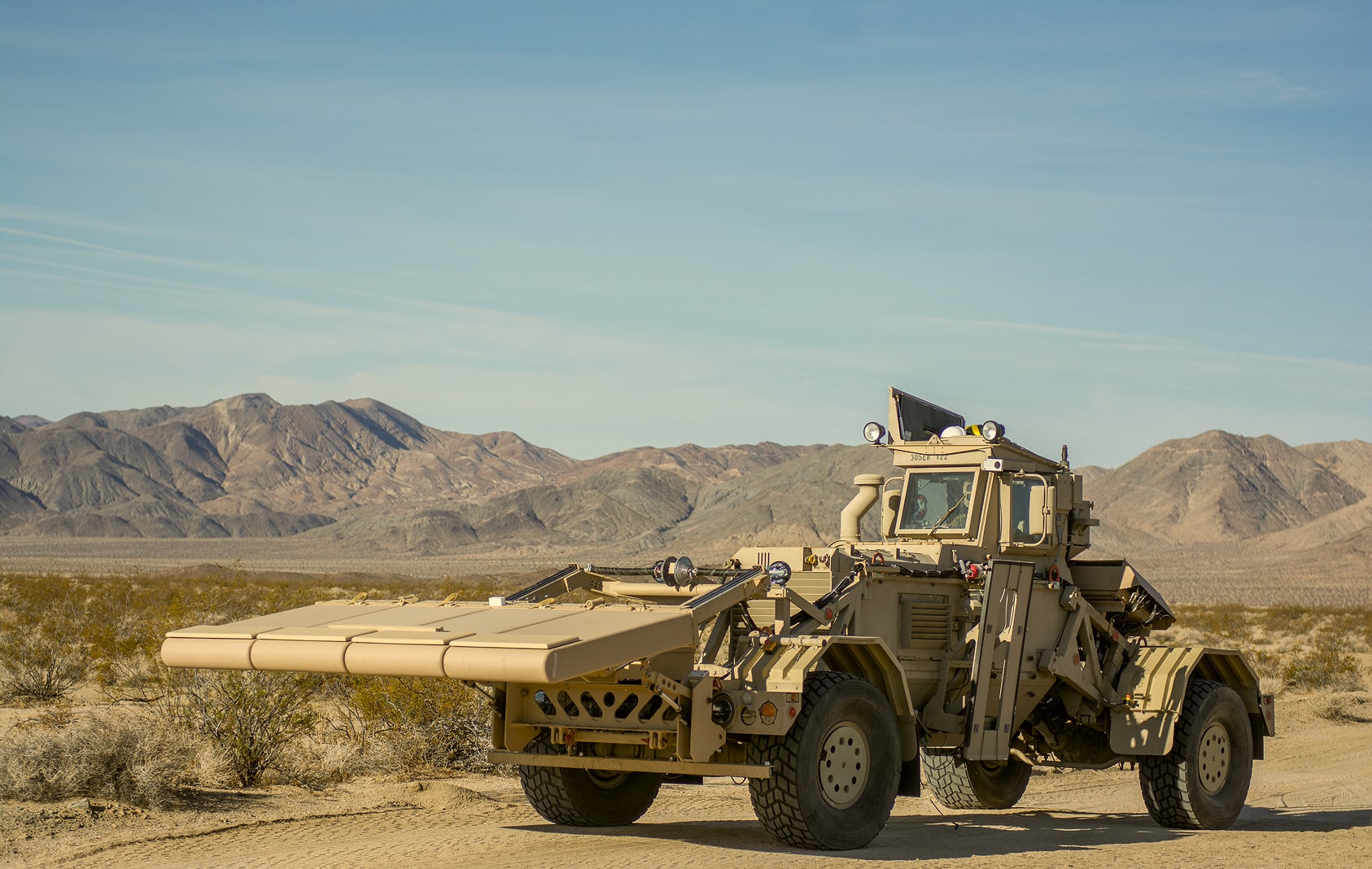
NIITEK specializes in Ground Penetrating Radar systems used by the US Military to detect Improvised Explosive Devices (IEDs). Their Husky Mounted Detection System is a vehicle-mounted radar tasked with leading convoys safely across potentially mine-laden territories.
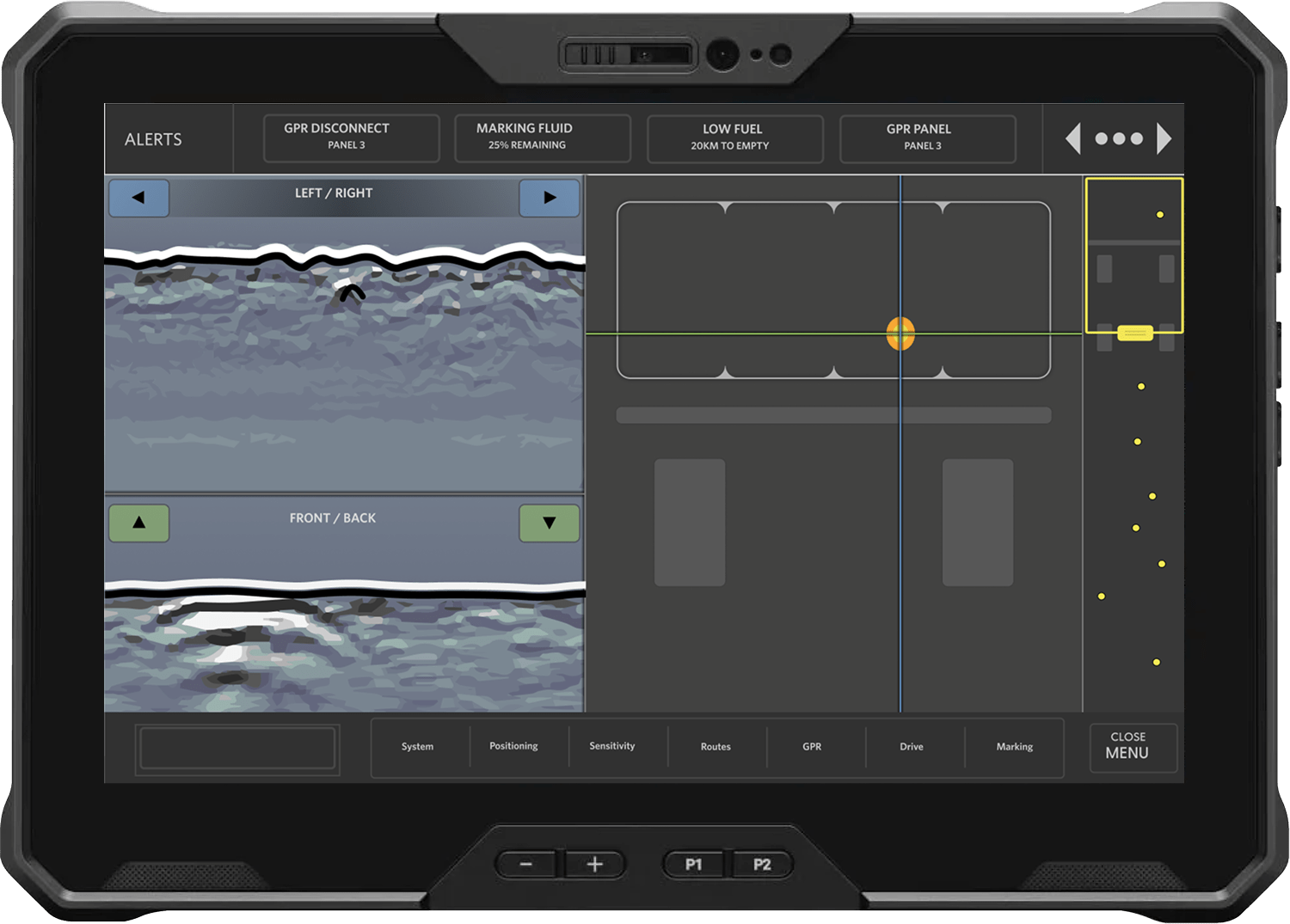
The software, used to identify IEDs, is critical to mission success—and it wasn’t working for users. Soldiers need quick, trustworthy analysis in order to make timely decisions, but the system they used suffered from low readability in sunlight, a lack of visual hierarchy, and an absence of historical threat data to support decision making.
A study by AOAV reported that between 2011-2020, IEDs were responsible for 171,233 deaths worldwide. In the same period, IEDs accounted for 48.7% of all US military deaths.
To us, the stakes were clear: getting this design right would mean saving more lives.
The Work
Here’s how we helped Niitek
The best way to design for a warfighter is to walk a mile or two in their boots (or in this case, ride a mile or two in their detection vehicle). That’s why we spent time getting to know the soldiers, trying out their equipment, riding along in their armored vehicles, and running tests out in the hot sun—just like they would be while using the software.
Key activities
- Contextual Analysis
- Personas
- Information Architecture
- UI Design
- Usability Testing
All this learning empowered us to create something truly cutting edge. The new system improved spatial awareness, prioritized alerts, simplified user inputs, and increased detection analysis screen real estate by 33% over the previous system. We also created a new system of visual cues and historical detection data to increase precision in threat identification. Operators could now detect threats with more confidence than ever before.
Have you ever tried to look at your phone outdoors, but the screen was all washed out in the sunlight?
Imagine that, but you’re traveling through a war zone and your life depends on your ability to clearly read what’s on the screen. As part of our research, we performed over 50 color readability tests – both indoor and outdoor – to ensure we had the perfect design for soldiers to analyze threats with clarity and speed.

“Since the initial release, the user experience has been ported to multiple projects due to its overwhelming success. Operators have praised the user interface for ease of use…future planning has it being fully integrated on the company’s flagship product.”
Arthur Fernandes Program Manager, Niitek
The Impact
Soldiers believed we increased their likelihood of survival
The results went far beyond improved usability metrics. In field tests conducted by a third-party evaluator, soldiers consistently reported that the redesigned interface made them faster, more aware, and more confident in high-risk situations.
- 100% felt the new system enhanced their ability to perform the intended mission.
- 93% of soldiers would like to deploy with the new system.
- 93% of soldiers felt the new system had greater detection capability.
- 87% of soldiers felt the new system provided greater precision marking capability.
- 87% of soldiers felt the new system reduced workload.
By clarifying cognitive input and user action, expanding critical detection real estate, and streamlining interaction patterns, the system became both easier to operate and easier to trust. Its effectiveness was so evident that the experience was adopted across multiple programs, with operators praising its simplicity and reliability. Most importantly, soldiers expressed that the new design didn’t just enhance performance—it increased their sense of safety and their belief that the system could help keep them alive.